

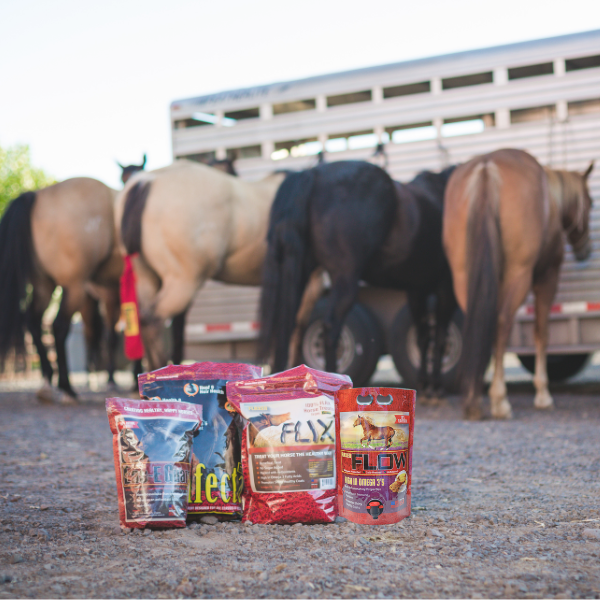



Introducing Flaxen Metab: Advanced Support for Insulin-Resistant, EMS & Easy-Keeper Horses
Metabolic horses—those prone to Equine Metabolic Syndrome (EMS), insulin resistance (IR), cresty necks, laminitis, or chronic weight challenges—need targeted nutritional support. Their bodies struggle with glucose regulation, muscle tension, and oxidative stress, making key nutrients like chromium, magnesium, and natural vitamin E essential.
To address these needs, we created Flaxen Metab, a specialized metabolic supplement formulated with research-supported ingredients:
- 1,000 IU Natural Vitamin E
- 2 mg Chromium
- 2,500 mg Magnesium Glycinate
Each nutrient works synergistically to promote healthy glucose metabolism, neuromuscular comfort, and improved insulin sensitivity.
Chromium for Horses: Research-Supported Improvement in Insulin Sensitivity
Chromium enhances the effectiveness of insulin, helping metabolic horses regulate glucose more efficiently.

Research Study: Chromium Improved Insulin Sensitivity in Older Mares
A study published in the Journal of Equine Veterinary Science (Otabachian et al., 2011) found that older mares receiving chromium demonstrated significant improvements in insulin sensitivity, highlighting chromium’s direct influence on m
etabolic stability.
Benefits of Chromium for EMS & IR Horses
- Helps insulin transport glucose into cells
- Stabilizes blood glucose levels
- Supports improved metabolic efficiency
- May help modulate cortisol under stress
Flaxen Metab delivers 2 mg chromium, aligning with research-backed levels for metabolic support.
Magnesium for Horses: Calming, Muscle Support & Improved Insulin Function
Magnesium is often deficient in hay-fed and easy-keeper horses, and deficiency contributes to muscle tension, metabolic stress, and insulin resistance.
Research Study: Magnesium Improved Insulin Sensitivity
A 2020 study in Iranian Journal of Basic Medical Sciences (Liu et al., 2020) showed that magnesium supplementation in rats significantly:
- increased insulin sensitivity
- decreased insulin resistance
- improved glucose utilization
These findings reinforce magnesium’s well-documented role in glucose metabolism.
Why Magnesium Glycinate Is Best
- Supports calmer behavior
- Reduces muscle soreness & tightness
- Helps insulin function effectively
- Chelated for superior absorption
Flaxen Metab contains 2,500 mg magnesium glycinate to maximize metabolic benefit.
Natural Vitamin E for Horses: Neuromuscular Support, Antioxidant Protection & Improved Insulin Regulation
Metabolic horses are frequently vitamin E deficient because they're restricted from grazing fresh pasture — the richest natural source of vitamin E. Yet vitamin E plays a powerful role in metabolic stability, muscle function, and insulin regulation.

Research Study: Vitamin E Supplementation Improves Insulin Resistance & Glycemic Control
A 2023 systematic review and meta-analysis published in the Nutrition Journal
“Effect of Vitamin E Intake on Glycemic Control and Insulin Resistance in Diabetic Patients”
(Asbaghi et al., 2023) analyzed multiple randomized controlled trials and found that vitamin E supplementation:
- Reduced insulin resistance (HOMA-IR)
- Improved fasting blood glucose
-
Enhanced overall glycemic control
While this research was conducted in humans, the mechanisms are highly relevant to horses: oxidative stress, inflammation, and insulin resistance are closely linked across species. Vitamin E’s ability to neutralize oxidative damage helps stabilize metabolic pathways — making it especially valuable for EMS and IR horses.
Why Natural Vitamin E Is Essential for Metabolic Horses
-
More bioavailable than synthetic vitamin E
-
Supports neuromuscular function and nerve health
-
Helps reduce muscle soreness and stiffness common in insulin-resistant horses
-
Provides antioxidant protection that directly supports healthier insulin function
-
Reduces oxidative stress, a major driver of metabolic dysfunction
Flaxen Metab delivers 1,000 IU of natural vitamin E per serving, providing highly absorbable antioxidant support for horses unable to graze green grass.
Why Flaxen Metab Is One of the Best Supplements for Metabolic Horses

With a flaxseed base and research-supported levels of chromium, magnesium, and natural vitamin E, Flaxen Metab supports:
- Improved insulin sensitivity
- Healthier glucose metabolism
- Reduced muscle tightness & soreness
- Stronger neuromuscular function
- Lower oxidative stress
- A calmer, more balanced demeanor
Flaxen Metab is an ideal supplement for EMS horses, IR horses, easy keepers, cresty-neck types, and horses with laminitis history.
Works Cited
1. Chromium Study (Old Mares – Insulin Sensitivity)
Otabachian, S., Hembrooke, T., & Hess, T. M. (2011). Effects of a feed supplement containing fatty acids and chromium on insulin sensitivity in old mares: A preliminary study. Journal of Equine Veterinary Science, 31(5–6), 291–296.
2. Magnesium Study (Insulin Sensitivity in Diabetic Rats)
Liu, H., Li, N., Jin, M., Miao, X., Zhang, X., & Zhong, W. (2020). Magnesium supplementation enhances insulin sensitivity and decreases insulin resistance in diabetic rats. Iranian Journal of Basic Medical Sciences, 23(8), 990–998. https://doi.org/10.22038/ijbms.2020.40859.9650
3. Vitamin E Study (Systematic Review & Meta-Analysis – Glycemic Control)
Asbaghi, O., Nazarian, B., Yousefi, M., Anjom-Shoae, J., Rasekhi, H., & Sadeghi, O. (2023). Effect of vitamin E intake on glycemic control and insulin resistance in diabetic patients: An updated systematic review and meta-analysis of randomized controlled trials. Nutrition Journal, 22(1), 10. https://doi.org/10.1186/s12937-022-00836-3






Leave a comment (all fields required)